UK Vape Tax Dates: The Full 2026–2027 Timeline
Every few years, something lands in the UK vaping market that genuinely changes the maths. Not a new brand, not a new coil, not a flavour ban rumour. Something structural. Something that rewrites what you actually pay at checkout. The 2026 Vaping Products Duty (VPD) is that thing, and unlike most regulatory changes that creep in gradually, this one hits in a single step. No phased introduction. No gradual price creep. A simple flat duty on each millilitre of vaping liquid sold in the UK, beginning 1 October 2026. If you vape regularly and haven't yet worked out when does vape tax start, or how the timeline affects the products you normally use, this article is for you.
What Is the Vaping Products Duty?
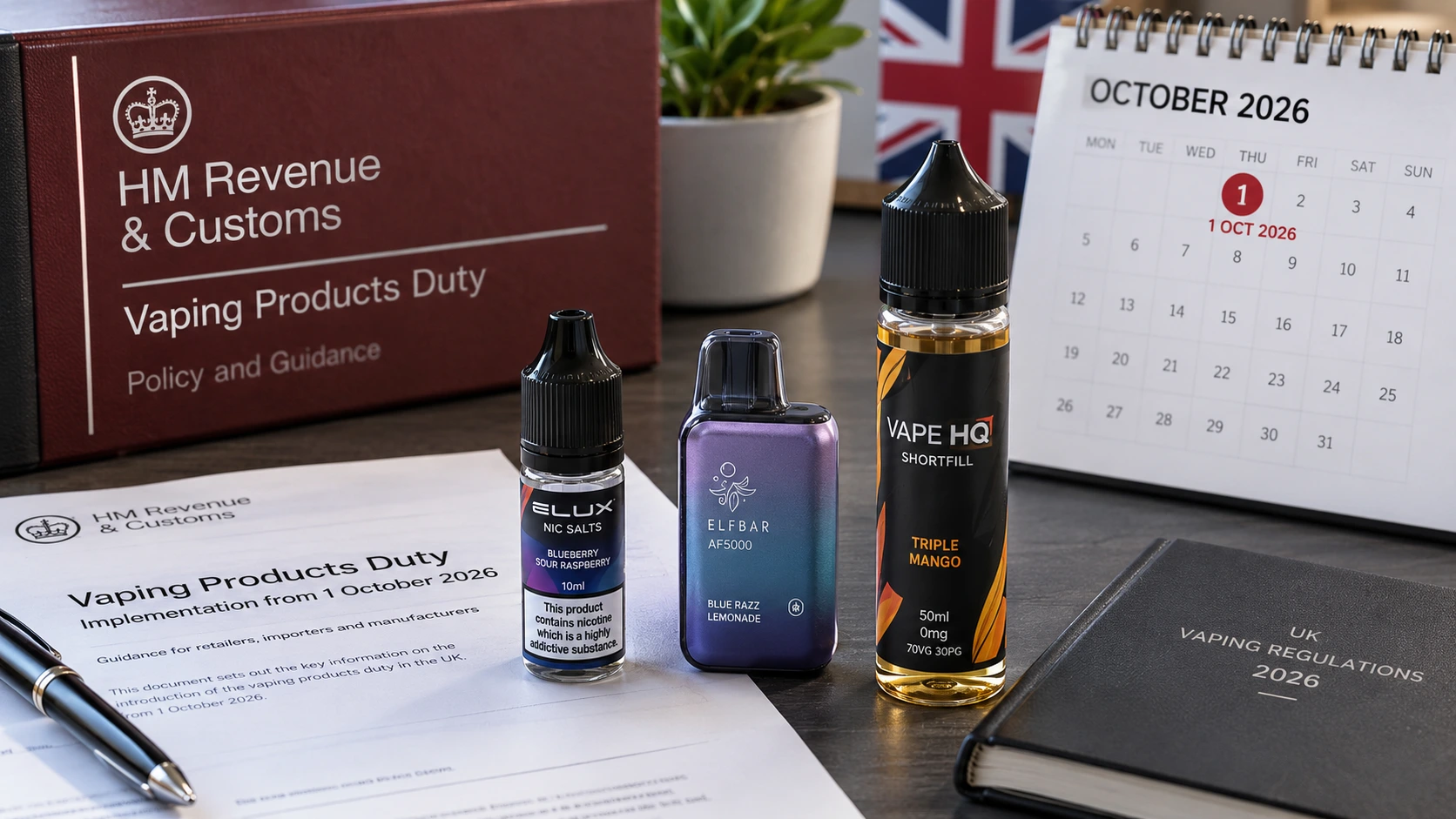
The Vaping Products Duty is a new excise duty on vaping products in the UK. HMRC has set a flat duty rate of £2.20 per 10ml for all e-liquids, regardless of nicotine content. This means both 0mg shortfills and 20mg nic salts are subject to the same VPD rate per millilitre. The £2.20 figure represents the actual VPD rate. If the full cost of the duty is passed on to consumers and VAT is charged on this amount, the VAT-inclusive impact would be approximately £2.64 per 10ml.
Hardware remains unaffected. Devices, coils, empty pods, batteries, and chargers remain on standard 20% VAT only. The duty sits entirely on the liquid, which is the part of vaping that people buy repeatedly. That distinction matters when you are budgeting month to month.
Not sure which products fall within the new duty rules? Our guide explains which vapes are taxed and what VPD covers and exempts.
The introduction of the levy has been rationalised by the government in two ways. Firstly, the levy was introduced to make sure that these vaping products are not easily available to youths and non-smokers. Secondly, the levy would generate revenue for the government. In accordance with the Vaping Products Duty policy document by HMRC, the levy is expected to generate revenues amounting to £135 million in the first year and around £550 million every year by 2030-31.
The 2026–2027 Timeline at a Glance
Three dates anchor everything that follows.
| Date | What Happens |
| 1 April 2026 | HMRC registration opens for manufacturers, importers, and businesses storing duty-liable products. |
| 1 October 2026 | Vaping Products Duty goes live; duty stamps required on all new stock entering retail |
| 1 April 2027 | All vaping products sold or supplied in the UK must carry a valid vaping duty stamp. Selling unstamped products outside the permitted arrangements can result in penalties and, in serious cases, criminal enforcement. |
Between 1 October 2026 and 31 March 2027, retailers can legally sell existing unstamped stock alongside newly taxed stamped products. From 1 April 2027, vaping products must carry a valid vaping duty stamp. Unstamped products must not be sold or supplied.
If you want to understand how the new duty could affect your actual product costs, see our guide on What the Vape Tax Means for UK Vapers.
1 April 2026: The Supply Chain Begins to Shift
From 1 April 2026, manufacturers, importers and certain warehouse operators can apply to HMRC for approval under the Vaping Products Duty and Vaping Duty Stamps Scheme. The approval requirements depend on the business's role in manufacturing, importing, storing, moving or supplying vaping products and its obligations under the duty and stamping rules. Retailers buying duty-paid products from approved suppliers generally do not need to register, simply because they sell those products to consumers.
1 October 2026: The Date Your Prices Change
This is the date that will have a direct impact on the price you see at checkout. From 1 October 2026, VPD comes into effect at a rate of £2.20 per 10ml of vaping liquid. For anyone asking when does vape tax start, this is the key date to remember. The duty is accounted for under the applicable production, importation and release-for-consumption rules, meaning it can feed through the supply chain into retail pricing. However, the final price consumers pay will depend on how manufacturers, importers, wholesalers and retailers choose to pass on the additional cost.
VPD Rates Across Common Vaping Products
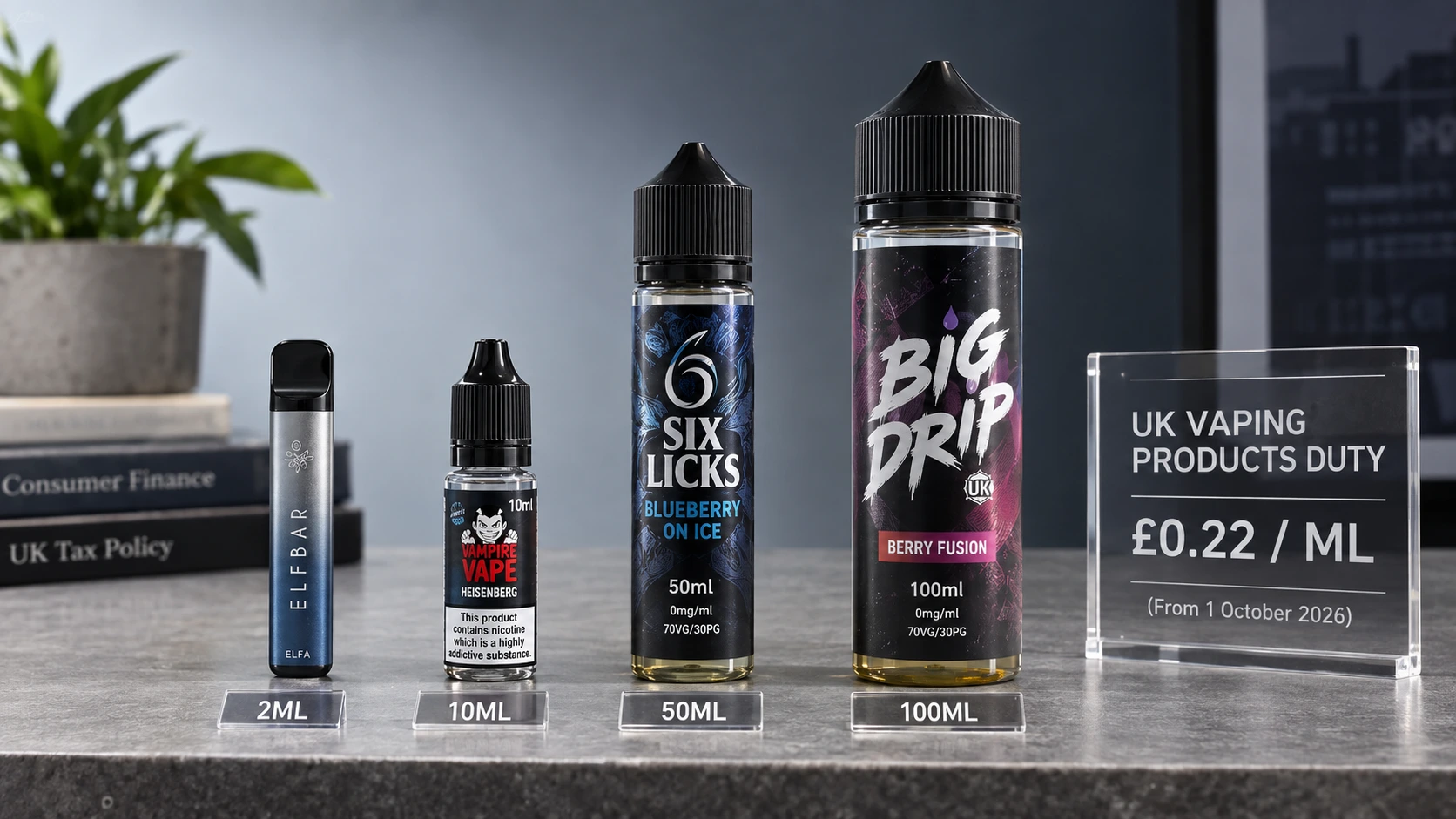
The VPD calculation is straightforward: the duty is charged at £0.22 per millilitre, with 20% VAT applied to the duty amount. The table below shows how the duty could affect some of the most common vaping product formats.
| Product Format | Liquid Volume | Duty Only | Duty + VAT |
| Prefilled pod (e.g. Lost Mary BM600) | 2ml | £0.44 | £0.53 |
| Standard nic salt / 10ml e-liquid | 10ml | £2.20 | £2.64 |
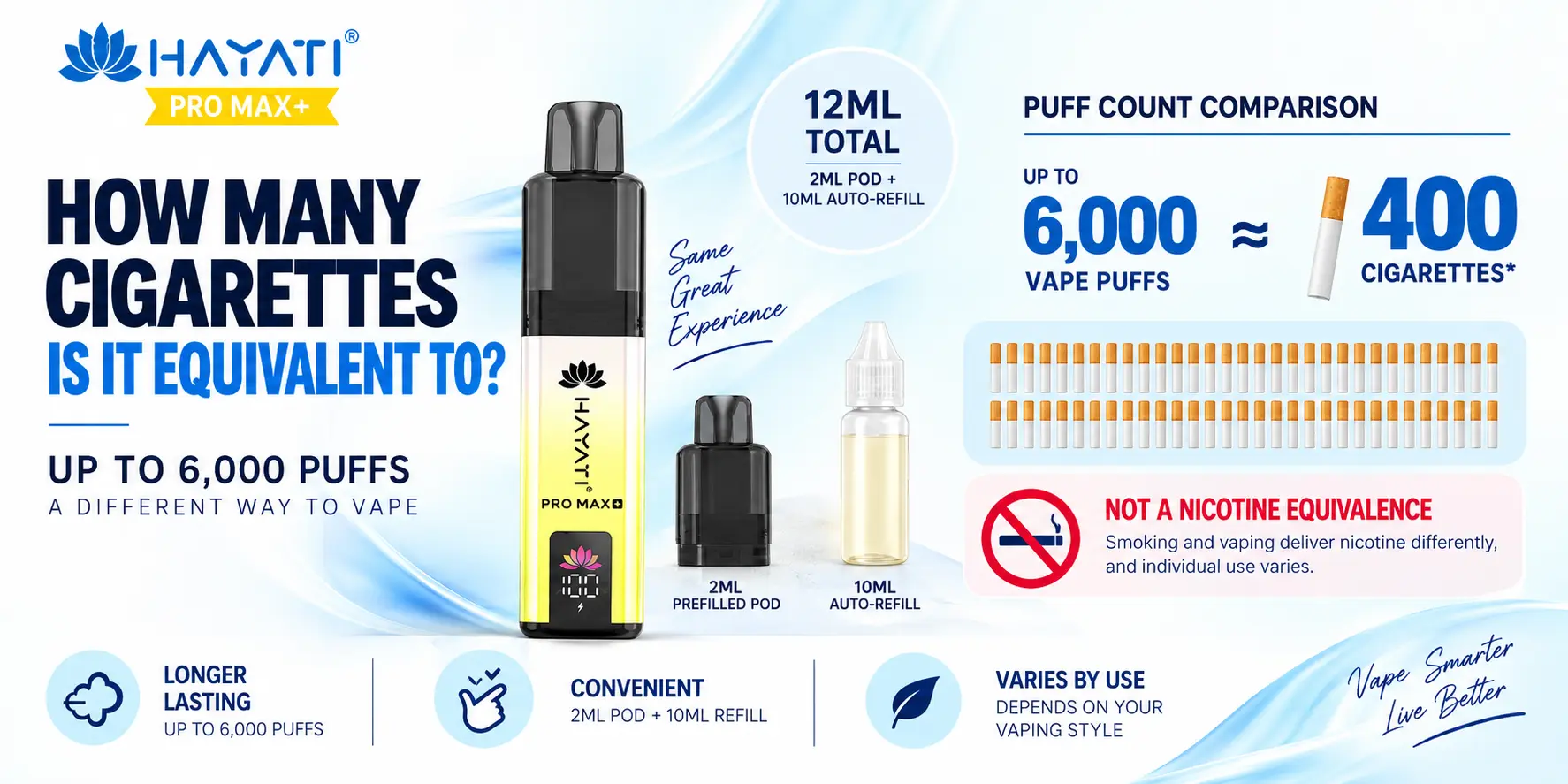
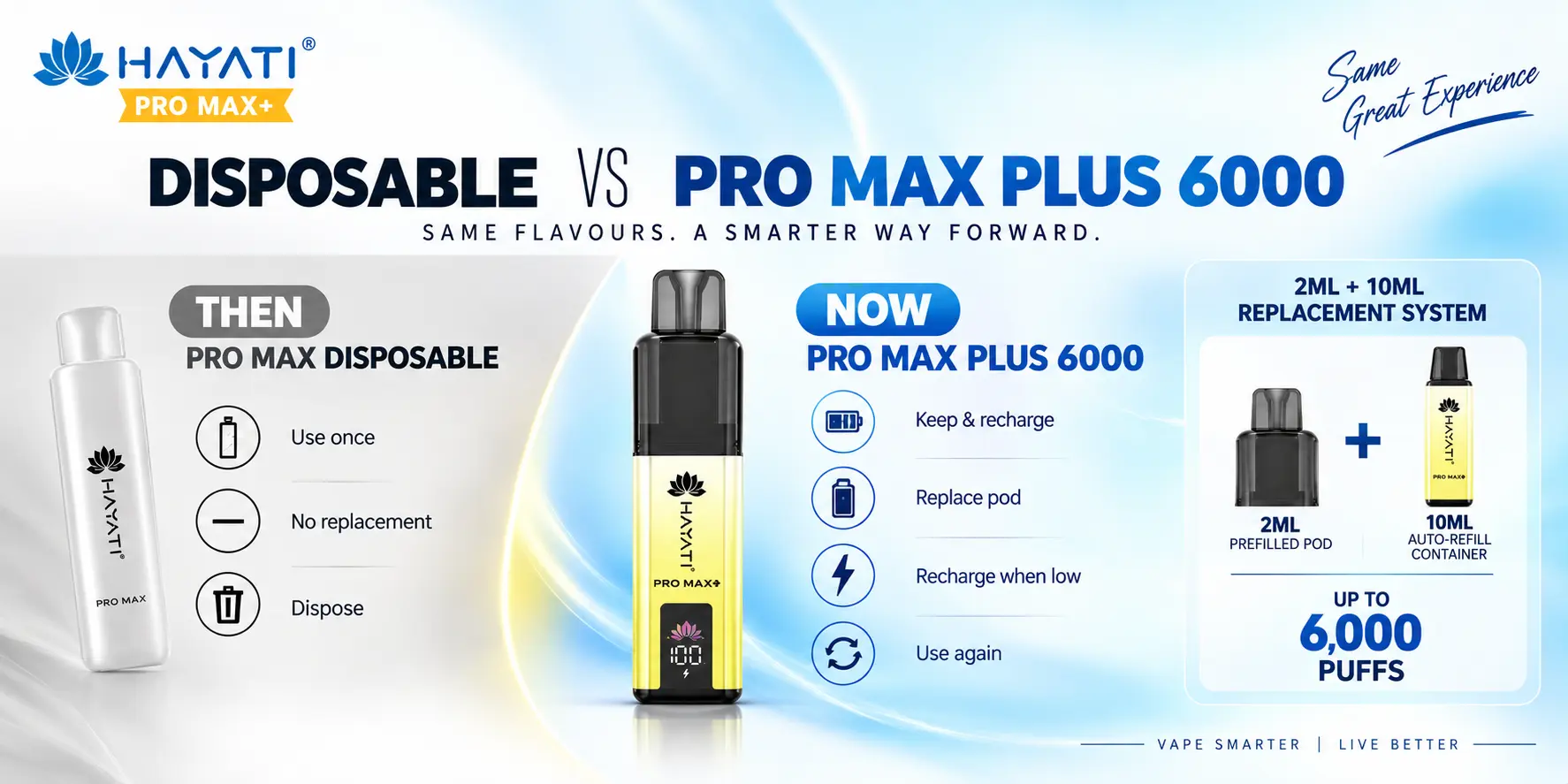
| 12ml vaping product / refill combination (e.g. Hayati Pro Max Plus, IVG Pro 12, Lost Mary BM6000) | 12ml | £2.64 | £3.17 |
| 50ml shortfill | 50ml | £11.00 | £13.20 |
| 100ml shortfill | 100ml | £22.00 | £26.40 |
VPD is calculated at £2.20 per 10ml. The “Duty + VAT” figures are illustrative and assume that the full VPD cost is passed on to the consumer with VAT then applied to the additional duty amount. Actual retail prices may differ depending on how retailers choose to absorb or pass on the cost.
Duty stamps also become mandatory from 1 October 2026. From this date, vaping duty stamps must be attached to individual vaping products sold or supplied in the UK, subject to the relevant duty-suspension and transitional arrangements. Products released for sale by manufacturers and suppliers from this date will need to carry the required duty stamp.
Vape and Go stocks a wide range of vaping products, including nic salts, prefilled pods and refillable vaping products.
1 October 2026 to 31 March 2027: Two Prices, One Shelf
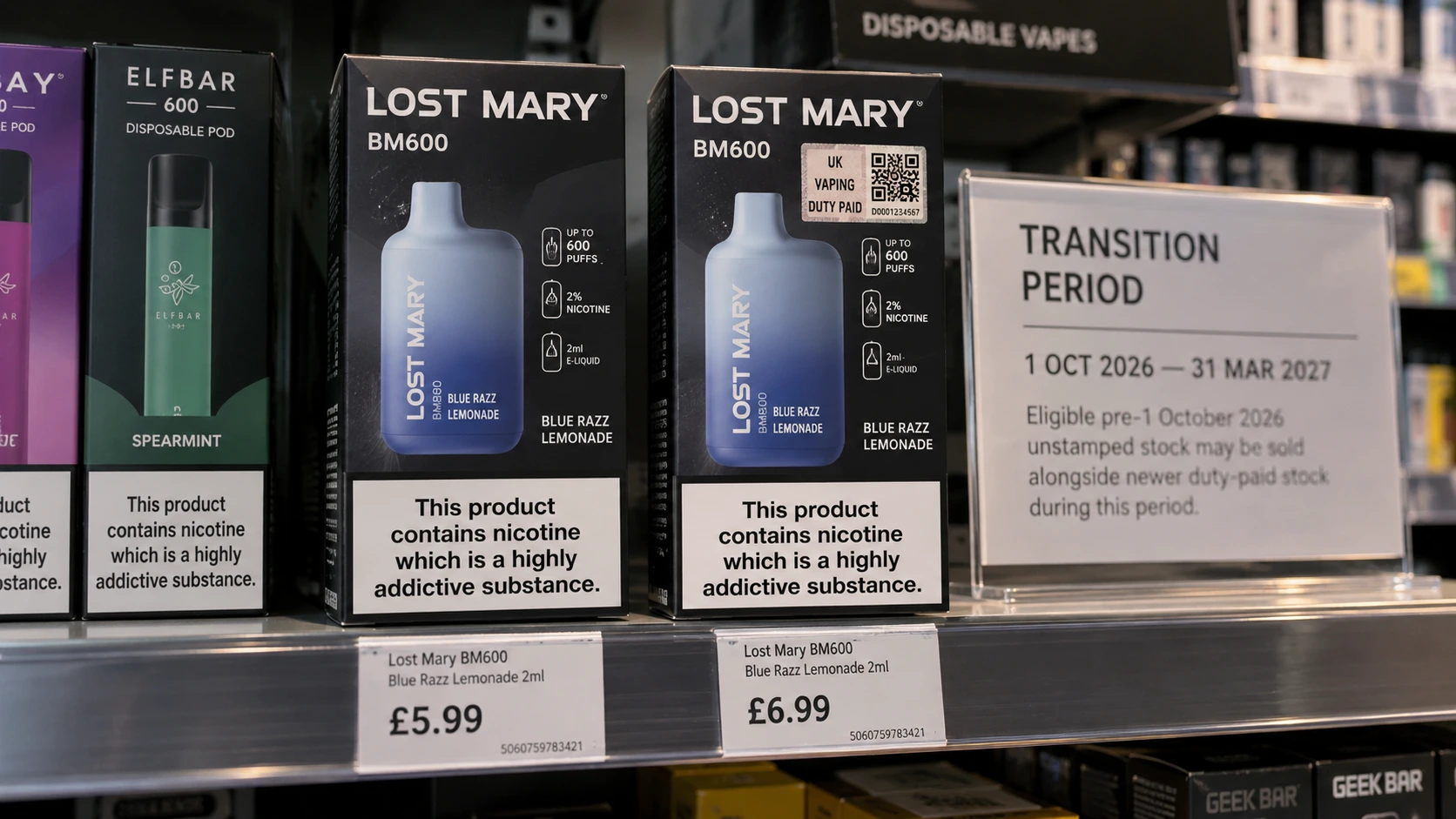
During this six-month transitional period, retailers can continue to sell eligible unstamped stock that was produced or imported before 1 October 2026, alongside newer products carrying the required duty stamp. This means pre-existing stock and newly duty-paid stock may be sold at different prices while older inventory is being cleared.
If you're considering buying before the new duty comes into effect, our guide explains how to save before the UK Vape Tax and what to consider before stocking up.
Why The Same Product Can Have Two Different Prices?
Faster-selling flavours and formats may move to duty-paid stock sooner, while slower-moving lines may remain at older prices for longer if eligible pre-October inventory has not yet sold through. As a result, two otherwise identical products could temporarily be offered at different prices during the transitional period, depending on the stock held by the retailer.
1 April 2027: The Deadline With No Flexibility
On 1 April 2027, the transitional period ends. From this date, vaping products outside duty suspension must carry the required duty stamp. Selling or otherwise dealing in unstamped vaping products where a stamp is required can result in enforcement action, including penalties and, in serious cases, criminal prosecution.
How Does the Duty Hit Each Product Type Differently?
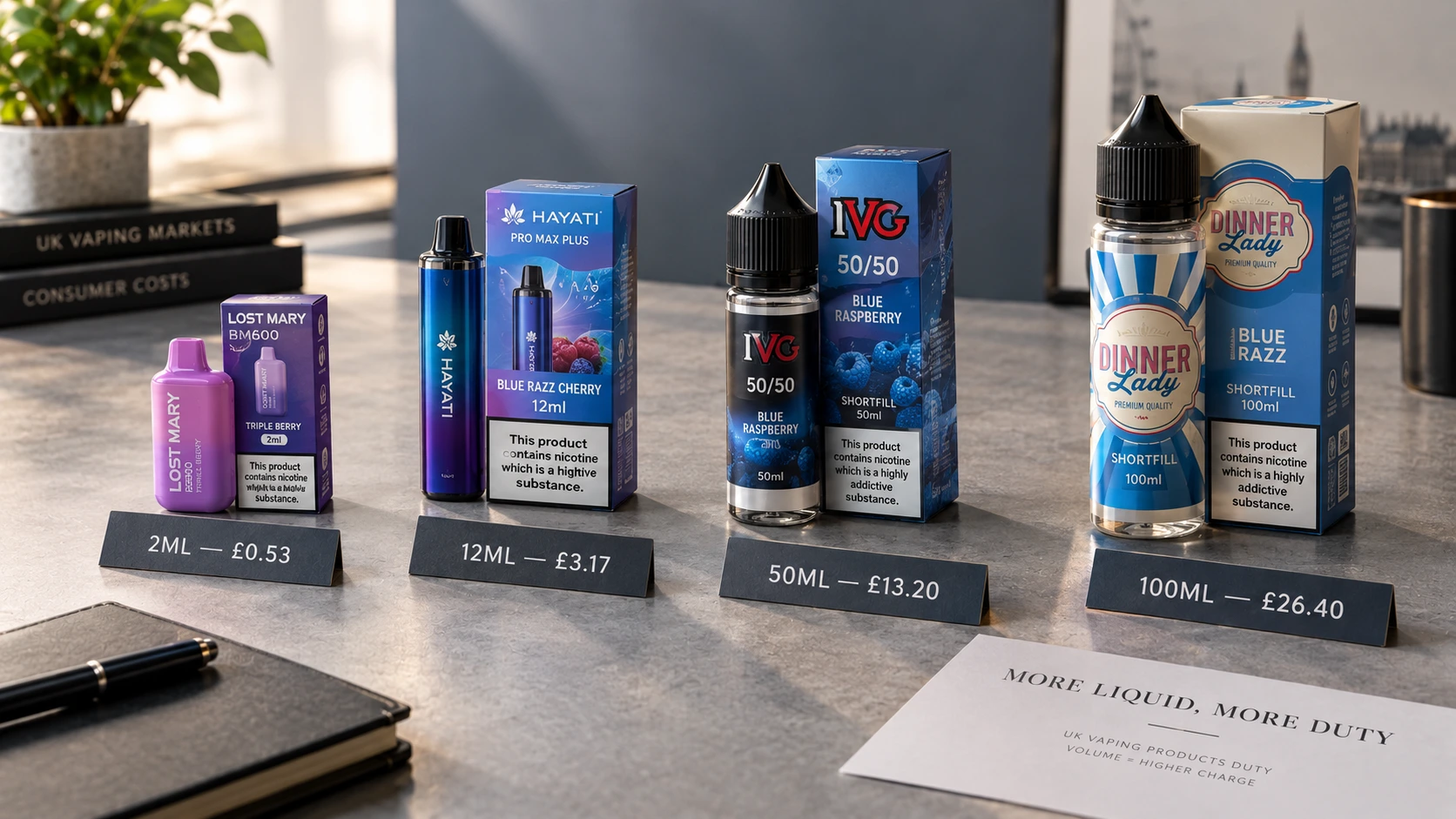
VPD is charged based on the volume of liquid in a product rather than as a fixed charge per item. This means products containing more vaping liquid will incur a higher amount of duty. Pod users will see the smallest increase in cost per purchase; a 2ml prefilled pod such as the Lost Mary BM600 would incur a 53p in duty and VAT, which is a noticeable but relatively modest increase per unit.. By comparison, 12ml products such as the Hayati Pro Max Plus, IVG Pro 12 and Lost Mary BM6000 systems would carry £3.17 in duty and VAT per unit.
Larger-volume products such as shortfills face a higher VPD charge because the duty is calculated per millilitre. A 100ml bottle incurs £22 in VPD. If the full duty cost is passed on to the consumer and VAT is applied to the additional amount, the illustrative VAT-inclusive impact would be £26.40 before the original product price and any other changes to retail pricing. Multi-buy deals on shortfill products would be affected in the same way, since each additional bottle has its own full duty charge.
If you're considering which products may be worth buying before the duty takes effect, see our guide to the best shortfills to stock up on.
Refillable systems, such as the Vaporesso XROS range and OXVA XLIM GO, allow users to buy vaping liquid separately from the device. The VPD rate is the same for the same volume of liquid, regardless of whether the liquid is used in a refillable or prefilled system. Any potential cost difference comes from factors such as the retail price of the e-liquid, replacement pods or coils and other hardware expenses, rather than a reduced VPD rate.
Will Vaping Still Be Cheaper Than Smoking?
The UK government has stated the policy is intended to maintain a financial incentive for adult smokers to switch to vaping rather than remove the price difference entirely. The actual cost comparison will depend on cigarette prices, vaping consumption, product choice and how retailers pass the new duty through to consumers. The cost difference remains, but the price gap is likely to be narrower from October 2026. For anyone still wondering when does vape tax start, the answer is 1 October 2026.
FAQs - UK Vape Tax Dates: The Full 2026–2027 Timeline
When Does The UK Vape Tax Come Into Effect?
The Vaping Products Duty comes into effect on 1 October 2026. From this date, VPD applies under the new duty rules, and vaping duty stamps are required on liable vaping products sold or supplied in the UK, subject to the applicable transitional and duty-suspension rules.
Is There Tax For Vape E-Liquids Without Nicotine?
Yes. All vaping liquids will pay a duty of £2.20 per 10ml irrespective of the nicotine content. Zero-nicotine shortfills and nic shots are taxed at the same rate as 20mg vape e-liquids.
Can Vape Retailers Sell Unstamped Stock Post October 2026?
Yes, during the transitional period, provided the stock meets the applicable rules. HMRC allows retailers to sell eligible unstamped stock produced or imported before 1 October 2026 until 31 March 2027. From 1 April 2027, vaping products outside duty suspension must carry the required duty stamp.
Why Can The Same Item Be Found At Two Different Prices?
From 1 October 2026 to 31 March 2027, retailers can sell both pre-duty and post-duty stock providing the requirements are met. This means the same product may have different prices depending on when the particular batch entered the supply chain and whether VPD has been accounted for.
How Can I Tell If A Product Meets The Requirements From April 2027 Onwards?
From 1 April 2027, vaping products outside duty suspension that are required to carry a duty stamp should have the appropriate Vaping Duty Stamps. An unstamped product after this date may indicate that it does not meet the applicable VPD requirements. Consumers should therefore buy from reputable retailers and check the product packaging carefully.
Salman Essap is the Founder, CEO, and Chief Reviewer at Vape and Go. An ex-smoker who switched to vaping in 2016, Salman leverages 8 years of industry expertise and hands-on product knowledge to guide adult users. He oversees all educational content on the platform, ensuring absolute compliance with UK TRPR and MHRA regulations, while championing safety, transparency, and responsible retail.